|
Plinio Corrêa de Oliveira
Bishop Vital: Model of Pastoral Charity
|
|
|
In an article commemorating the centenary of the birth of Bishop Vital (1844-1878 – Legionário, June 8th, 1944), commonly known as Dom Vital, Prof Plinio Corrêa de Oliveira extols the prelate’s virtues. * * *
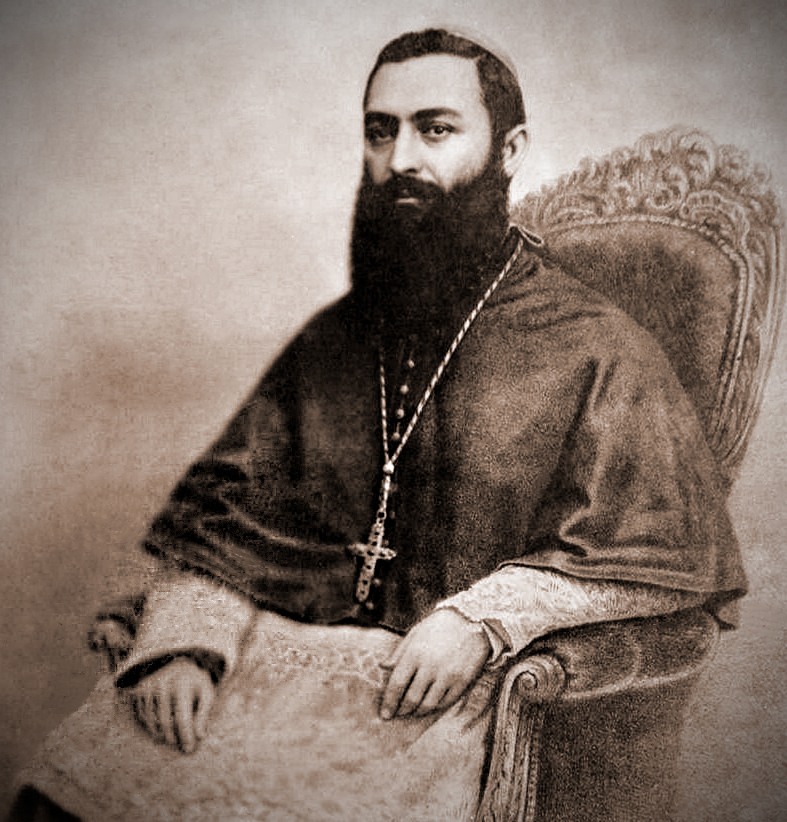
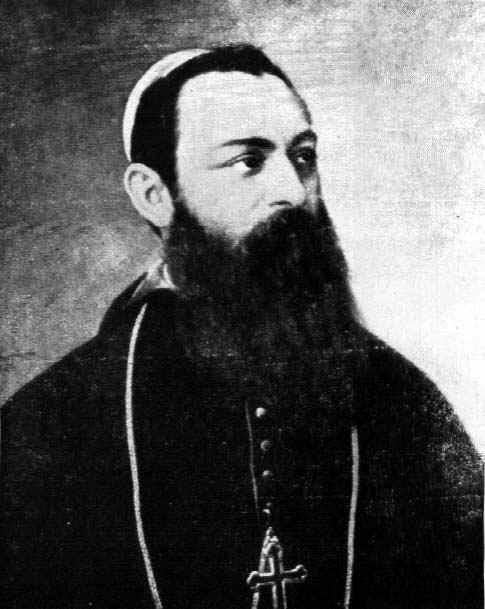
Generally speaking, the Brazilian people have a confused notion of who Dom Vital was. We know that he was a bishop of rare valour, who faced great perils in order to overcome Masonry. Valour in defence of good and truth, however, is not a popular virtue. If there were holy cards and pictures of Dom Vital kissing babies, smiling to multitudes, giving blessings, and distributing alms (all attitudes proper to a bishop), he would bask in popularity. Instead, his photo depicts a young Dom Vital of pleasant yet strong features: his broad, high brow portrays audacity; his deep, serious gaze twinkles with intelligence and strength; he wears a virile beard, black and long; noble and energetic is his bearing. He has the air of a fighter, of a miles Christi (soldier of Christ). The photo seems to capture the moment when he was seated on the defence stand, as majestic as though he were in his palace, with his serene and penetrating eyes transfixed on the confused and indecisive judges. If it is true to say "Christians should be other Christs" then, a fortiori, "Bishops should be other Christs". The adorable moral physiognomy of Our Lord Jesus Christ spans the full spectrum of virtue, from the ineffable tenderness with which He said "let the little children come to Me" to the terrifying majesty which hurtled His enemies to the ground when He said the words "I am He" in the Garden of Olives. Similarly, the moral physiognomy of a bishop of the Catholic Church should also encompass all aspects of virtue, from tenderness to pastoral severity. However, Our Lord grants each one of us the grace of illustrating the Church by reflecting a particular spiritual facet. He calls some to edify Christianity by the splendour of their tenderness like St Francis de Sales, for instance. He calls others to defend Christianity by their pugnacity and their strength, as did Pope St. Gregory VII and Dom Vital. The latter's heart was overflowing with tenderness and kindness. It was precisely this kindness that compelled him to rise up like a giant, staking everything: his life, health, tranquillity, reputation, losing close friends, and gaining endless enemies, all to defend the souls which Masonry would drag to hell. There are times when authentic and genuine pastoral tenderness entails imitating Job: "I broke the jaws of the wicked man and out of his teeth I took away the prey" (Job XXIX, 17). Job also boasts: "I had delivered the poor man that cried out; and the fatherless that had no helper" (Job XXIX, 12). When Dom Vital was appointed to the archiepiscopal see of Olinda, many were the innocent victims who were caught "in the jaws of the wicked man" and numerous were the "poor own that cried out, and the fatherless that had no helper". If Dom Vital had excommunicated men who had caused material damages to widows and orphans, he would have been applauded by the whole country and everyone would have acknowledged that his just severity was inspired by charity. Masonry causes moral damages, however, not material. We live in a materialistic era that only acknowledges as evil that which harms the body. It was precisely spiritual and immortal souls, redeemed by the Precious Blood of Our Lord Jesus Christ that were daily being lost in the Masonic confraternities. The loss of a single one of these souls would be a disaster far worse than if the sun were to be extinguished, than if the Earth were to crash into the Moon, than if the entire city of Recife were to disappear beneath the ocean. Likewise, it would have been incomparably worse if Dom Vital had closed his eyes to this spiritual tragedy than if he would have shut himself within the comfort of his palace to shield his ears from the cries of indigent widows and orphans. It was to fulfill his duty of pastoral charity — of spiritual charity — that Dom Vital stood tall and firm. There are no emotional, material symbols for this kind of charity. One can be moved by a painting portraying someone distributing bread to the poor, but not many would be moved by a painting portraying someone in the act of "breaking the jaws of the wicked man", with blood dripping, a dislocated jaw and teeth strewn on the ground. It is easy to grasp how noble, just, Christian, and praiseworthy alms-giving is: no explanation is necessary. It requires long reflection, though, to grasp when it is good and praiseworthy to meddle with "the jaw of the wicked man". If there is one thing modern man detests more than reflection, it is long reflection over a matter. It comes as no surprise, then, that the average person today increasingly fails to grasp the significance of acts of charity like those practiced by Dom Vital. Herein lies, in my view, the most providential aspect of Dom Vital's mission. By his example, Dom Vital teaches us that the soul is worth more than the body; hence we must do more to defend the soul than we would do to defend the body. He also teaches us that, while all true Christians should prefer harmony over discord, meekness over pugnacity, and conciliation over conflict, nonetheless there are circumstances when it is our duty to discord, where conflict is inevitable, and where pugnacity is a moral requirement. A human soul is so valuable that all valour, all energies, and all licit means of resistance must be employed in its defence. When it comes to fulfilling our duty, we must go to extremes, just as Our Lord did; He never cast aside His Cross; rather He carried it to the top of Calvary where He then lay down upon it and allowed Himself to be nailed to it, and upon which He died-all because He wanted to do His duty: to obey His Father's Will.
Bishop Vital Maria Gonçalves de Oliveira (1844-1878) Biographical abstracts Born in 1844 in the Brazilian state of Pernambuco, the young Dom Vital began his studies under a priest. Esteemed by professors and students alike, he entered the local seminary and soon had the distinction of being sent to France to study Theology. He joined the Capuchins at Versailles, and upon completing his studies for the priesthood he returned to Brazil . In 1871, Dom Vital was appointed bishop of the city of Olinda by Pedro II, Emperor of Brazil. He was only twenty-seven years old, yet he faced a delicate situation not too dissimilar from the current row between the Government and the Catholic Church over adoption by same-sex couples. Notwithstanding the fact that the overwhelming majority of Brazilians at that time were Catholics, Masonry was rife in his diocese and in Brazil. Most of the political figures during the reign of Dom Pedro II - having also played a prominent role in Brazilian independence - were avowed masons; indeed the Prime Minister himself, the Viscount of Rio Branco, was their Grand Master. In Dom Vital's diocese, there were many priests who were masons and many religious confraternities were controlled by masons. Other bishops were also concerned at this deplorable state of affairs. They had two options: to remain silent and allow the situation to deteriorate until masonry had taken effective control of everything, even the Church, or to decry the situation and attempt to put an end to it at the risk of displeasing the very Emperor himself. The showdown between the Church and her poorly veiled enemies came when the Bishop of Rio de Janeiro, Dom Pedro Maria de Lacerda, relieved a priest from his faculties for having addressed a Masonic assembly (an event that was reported by the newspapers all over Brazil ). The masons immediately convened a general assembly and declared an all-out press campaign against the Church. Even before he returned to Brazil, the press sought to sow suspicions against Dom Vital, calling him a dangerous man and an inquisitor-like friar. The new bishop did not disappoint: with the support of a third bishop, Dom Antonio Macedo Costa, he began a campaign against Masonry by calling upon the members of the confraternities to either abandon Masonry or face suspension. He did, in fact, suspend the recalcitrant confraternities, who then appealed to the Court, and when Dom Vital was called to testify before the Prime Minister, he refused to comply since it was an internal Church affair. When a recalcitrant priest was suspended from using his faculties, his supporters (whose ranks included troublemakers and who were led by prominent members of the liberal party) resorted to vandalism. On the 14 May 1873, they invaded the Jesuit church, depredated the temple, and wounded dozens of the faithful who were attending Mass. In April of that same year, the government ordered that he halt the suspensions, but Dom Vital stuck to his duty rather than cave in to their demands. This outraged the emperor, who convoked the Privy Council where Dom Vital and Dom Macedo were condemned to four years of forced labour at the emperor's behest. Only one of the eleven members of the council stood up to the emperor and protested the injustice being committed against the bishops. Furthermore, the emperor sent an emissary to Rome to get Pope Pius IX to condemn the bishops. There was an outcry of public support for the bishops: the government received hundreds of thousands of written protests, forcing the emperor to call upon the mediation of a universally respected war hero, the Duque of Caxias, who only agreed to assist on the condition that the bishops be granted amnesty. This was given on 17 September 1875. Upon his release from prison, Dom Vital travelled to Rome to dispel the misinformation that had been spread by the emperor's emissaries. After hearing Dom Vital's explanations, the Pope issued a decree on 29 April 1876 in which he sided with the persecuted bishops. Sick and worn out by the ordeal, Dom Vital requested to be relieved of his office, which neither Pope Pius IX nor his successor Pope Leo XIII deigned to accept. Dom Vital returned to his diocese in October of 1876 where he was warmly welcomed. He resumed his work of moral restoration that had been interrupted by the dispute, but his health continued to decline, forcing him to return to Europe where he died on 4 July 1878 . He was only 33 years old. Dom Vital is considered a martyr of the Faith and defender of the rights of the Church. The above biographical data on Dom Vital was extracted from the website of FUNDAJ, which is a foundation subsidized by the Brazilian Federal Government. TFP Viewpoint – News from the Tradition, Family, Property Bureau for the United Kingdom, Vol. 15 No. 2, April 2007.
|
|