|
Plinio Corrêa de Oliveira
At Mrs. Edeltrudes’
Folha de S. Paulo, October 4, 1978 (*)
|
|
|
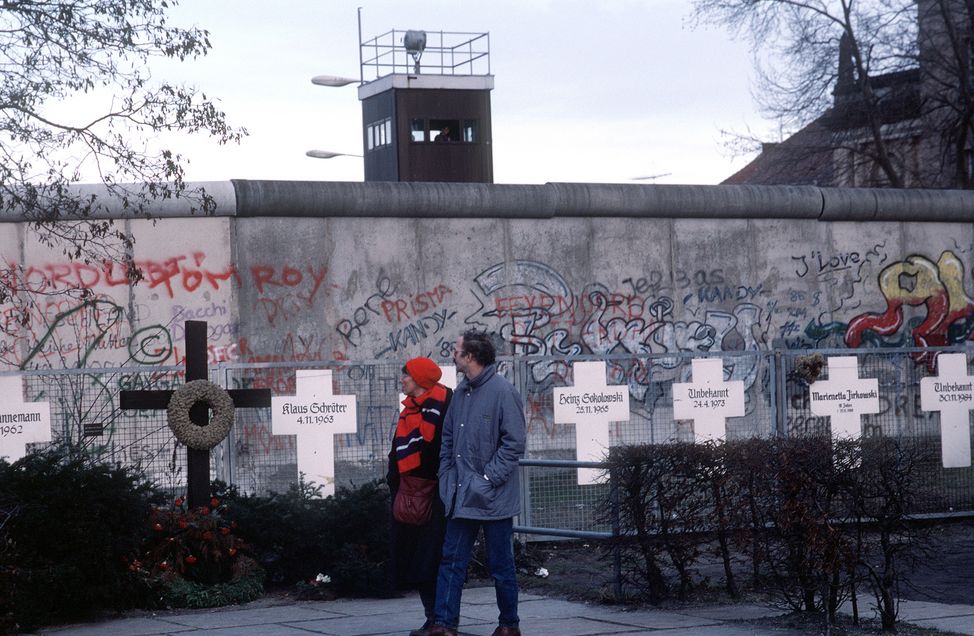
The French Revolution numbers among her antiquated enthusiasms. Lafayette, Mirabeau, Danton, Marat, Robespierre—she jumbles them all in the same feverish admiration. She still rants against the bloodthirsty rage of Louis XVI and the bacchanalia of Marie Antoinette. She is sure that when the Bastille was taken, it was found to be crammed with innocent prisoners who had been wasting away in inhuman dungeons. Since that time, the winds of history have ravished this body of myths to such an extent that, in my view of things, no credence is given them even by elementary-school teachers in the far backwoods. The backwoods of São Félix do Araguaia, for example, where Bishop Pedro Casaldáliga, pastoring badly, makes his feeble poetry and vigorous agitation. But Mrs. Edeltrudes (who, by the way, admires this restless country bishop) resists the gusts of the winds of history. She continues, alone but uninhibited, to rant against the apathetic Louis XVI and the gracious Marie Antoinette as if they were two ogres. This compact, solid lady, be it understood, is Catholic. Or at least she thinks she is. In this conviction, she is, moreover, confirmed by various priests of her acquaintance with whom she converses about Bishop Casaldáliga and friends of his like. One day I perceived she had a touch of ardent sympathy for Luther. The heresiarch's agitation, his unrestrained corpulence and his lewd manners amuse her. And she deems delightfully biting his cry "los von Rom" (free from Rome). Mrs. Edeltrudes also has a soft spot for Marx. According to her, the Manifesto of 1848 is at the cutting edge of progress. If someone were to show Mrs. Edeltrudes the contradictions that exist between this anachronistic progress and today's Paleolithic modernness, if he were to tell her that whoever reads Bishop Casaldáliga has difficulty in warding off the impression that the state of the Indians in their tribal settlements is preferable to our own civilized state, she would say that these were lies. And if someone were to actually show her a suggestive text (such as the document "Y-Juca-Pirama— The Indian: The One Who Must Die, pp. 21-23, signed by Bishop Casaldáliga along with five other bishops and six missionary priests), she would not even permit that such an article to be read to her. And, with this, imagining herself victorious, she would close the conversation with a few insolent remarks. Now picture the following. In the presence of this animated lady, I distractedly affirmed that the Bastille was found to be empty —or practically empty— on July 14. She lost no time in calling me anachronistic, old-fashioned, and so on. And she ended by saying that, for me, the ideal country would be an immense Bastille, completely surrounded by high walls behind which men would lead the monotonous and dismal existence of the condemned. "Just so!" I exclaimed. "And there is more. I dream of soldiers armed with the most modern machine guns and posted in watchtowers alone the walls. At intervals of, let's say every 20 feet, there would be automatic weapons set up to fire upon anyone attempting to escape. If someone managed to get by these, he would run into electric wires. Along the top of the wall, there would be metal blades to slice through the fingers of those attempting to climb onto it. The insolent deserter would thus fall to the ground." I looked Mrs. Edeltrudes in the eye. She was all aquiver. "That's it!" she sputtered. "It is a good thing that today you are finally confessing what is really in your soul! Well did I suspect that these were your thoughts—and the thoughts of all those devotees of the Holy Inquisitors: your Saint Pius V, your Saint Raymond of Peñafort, your Saint Peter Arbues". With these words, she incited the onlookers to pelt me with their disdain and insults. These onlookers, who have a certain sympathy for me, were disconsolate at the sight of my manifestation of morbid cruelty. I, however, felt neither crushed nor intimidated by this robust lady. Nor did I allow her to trample on me for too long a time. I said to her: "Don't get so angry, Mrs. Edeltrudes. Or, rather, get angry —get as angry as you can because you can't get angry enough. But don't get mad at me—because this regime behind high walls is neither what I would want nor implement. But it has been implemented by others, who, although strictly speaking not your friends, are friends of your friends. What I have just described is the new (as if the existing one were not enough) 620-mile wall that communist Germany just finished building from the Baltic to Czechoslovakia. And it is equipped with all the apparatus devised by the progress you admire so much—including the finger-slicing blades. The project was supervised and carried out by Soviet technicians."
Does the reader think that Mrs. Edeltrudes exploded? When she realized the snare I had set for her, her indignation against the said walls (next to which the Bastille is but a child's toy) began to diminish. By the end of my description, her expression revealed that she was finding the idea of such a wall comprehensible and almost congenial. But the onlookers were bursting with laughter. So, to defend herself, Mrs. Edeltrudes replied: "Dr. Plinio, you are making all this up. It is you reactionaries and fanatics who invent such stories." I: "But Mrs. Edeltrudes, I read all this in the New York Times. It was the unbiased Drew Middleton who wrote the story." She: "And am I expected to read the New York Times?" I: "Not really. But the story was carried in a popular morning paper in São Paulo." She: "You are a negative man. You can't leave the communists in peace." I: "And what you want for them is tranquility. Of course. They are friends of your friends. `Any friend of yours is a friend of mine,' goes the old proverb." Around me, the laughter was subsiding. Everyone started to speak softly of other matters in order to put Mrs. Edeltrudes more at case. And I also changed the subject. After all, she was the lady of the house... (*) This timely article was first published when the Soviets finished reinforcing the Iron Curtain.
|
|