|
Plinio Corrêa de Oliveira
"Non in commotione Dominus God is not found in agitation" (3 Kings 19:11)
"Catolicismo", no. 114, June 1960 (*)
|
|
|
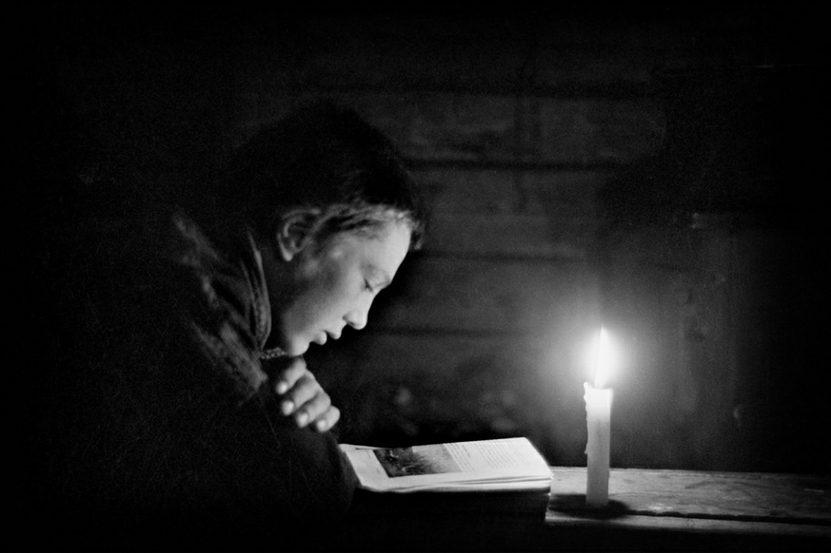
It is night. Imagine the complete stillness that inhabits the darkness captured by this photograph. The soul feels invited to reflection in such an atmosphere. The circumstances of daily life – great or small, pleasant, tiresome, or even painful – all disappear. Alone, by himself, man can overcome all these and enter into the superior realm of recollection, reflection, and study. It is an austere and calm happiness. Quite simply, it is a true happiness. This happiness is vividly apparent in this picture. Three lights glow in the picture. The least important of them is the one that properly merits the name “light,” the candlelight. Its reflection on the book is the picture’s second glowing light, creating the impression that the thoughts in the text have become luminous. The candlelight and its reflection on the book illuminate the face, and thus we see the third and most authentic light, that of an attentive and astute soul engaged in reading. Analyzing this face, we see that it is calm, absorbed, and happy. It is, as we said, the happiness of isolation and recollection, the happiness of thinking.
Our forefathers were avid for this kind of happiness, but those who appreciate it today are becoming increasingly rare. On the contrary, the number of those who find pleasure only in noise, agitation, and exhilarating sensations is growing. In our second picture, fans in a French stadium cheer wildly at their team's victory in a soccer match. Among all nationalities, ethnic groups, and races – among everyone today – the general tendency is to think that this is happiness. * * * Those who know the pleasure of recollection are in possession of a precious prerequisite for sanctification. “O blessed solitude, O sole blessedness!” said Saint Bernard. But for those who live amidst perpetual turmoil and who neither know nor want to live apart from it, so much racket drowns out the voice of grace. "Non in commotione Dominus – God is not found in agitation” (3 Kings 19:11).
|
|